Design of a Neuro-Fuzzy Visual Comfort Classifier for Smart Window Control
For my undergraduate aerospace thesis, I worked on a small piece of a larger smart-cabin idea: an aircraft window that could automatically adjust its transparency to proactively maintain passenger visual comfort. The project sat somewhere between cabin comfort, control systems, human factors, and a lot of MATLAB. The goal was not to build the physical window controller, but to design the top-level classifier that could turn lighting conditions into a reasonable tint command.
When it came time to select a thesis project, an opportunity came up as part of a larger Next Generation Aircraft Cabin research project within Dr. FengFeng Xi's lab. What made this interesting to me was the subjectivity of the problem and a curiosity for whether the machine learning methods I'd taken an interest in could be of use. In this case, it is one thing to say that a window should reduce glare, and another to decide how much glare is too much, how that should translate into tint percentage, and how the system should adapt when different passengers have different preferences.
The basic idea
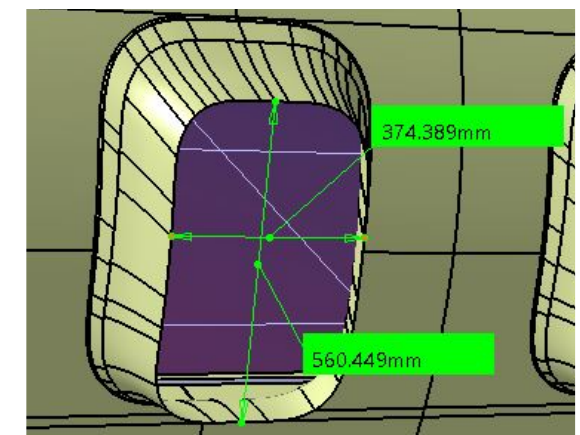
The controller used daylight glare index, or DGI, as the bridge between the physical lighting measurements and the comfort decision. The thesis assumed three luminance-related measurements: exterior luminance, interior/adaptation luminance, and the average luminance of the window itself. Given the conceptual window geometry, those values could be used to estimate how uncomfortable the glare might be for a passenger.
For the preliminary work, I didn't have an aircraft cabin instrumented with sensors, so the DGI calculation had to be evaluated using values from literature. Exterior luminance covered everything from dark days to direct sunlight, while the interior cabin range was based on comfortable lighting levels reported in prior work. The average window luminance was assumed to follow the exterior luminance, which is a simplifying assumption that would definitely need to be revisited in a real aircraft, especially near reflective surfaces like wings.
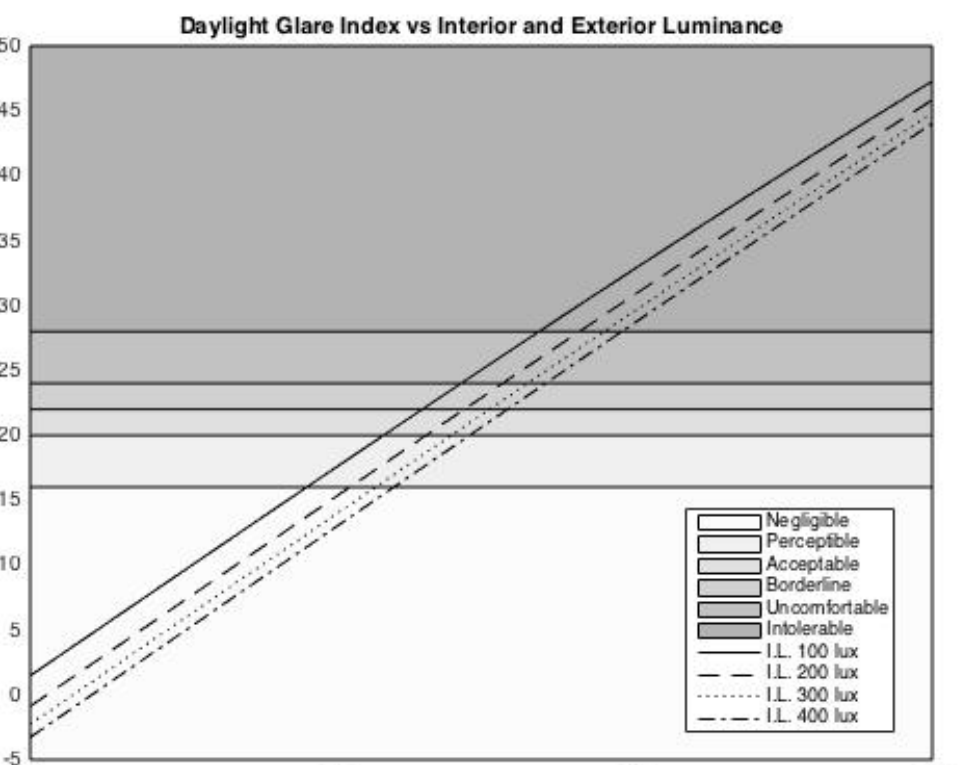
The expected trend showed up clearly: as exterior luminance increased, the predicted glare became more severe. A brighter interior also helped, at least theoretically, because the contrast between the cabin and the window became less harsh. That gave the project a useful starting point: instead of controlling tint directly from raw light measurements, the system could reason through an intermediate discomfort estimate.
Why fuzzy logic
Fuzzy logic made sense here because visual comfort does not have clean edges. A DGI of 28 may be considered intolerable, but 27.5 does not magically become comfortable. The boundaries are soft, and the controller needs to behave as if they are soft.
The fuzzy inference system had one input, DGI, and one output, tint percentage. The DGI input was split into membership regions such as negligible, perceptible, acceptable, borderline, uncomfortable, and intolerable glare. Each region then contributed to the final tint command based on how strongly the current DGI value belonged to that region.
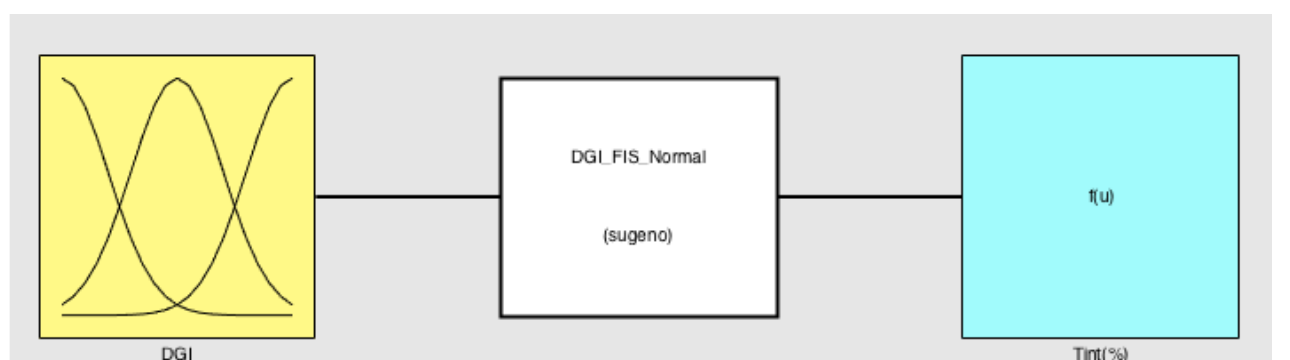
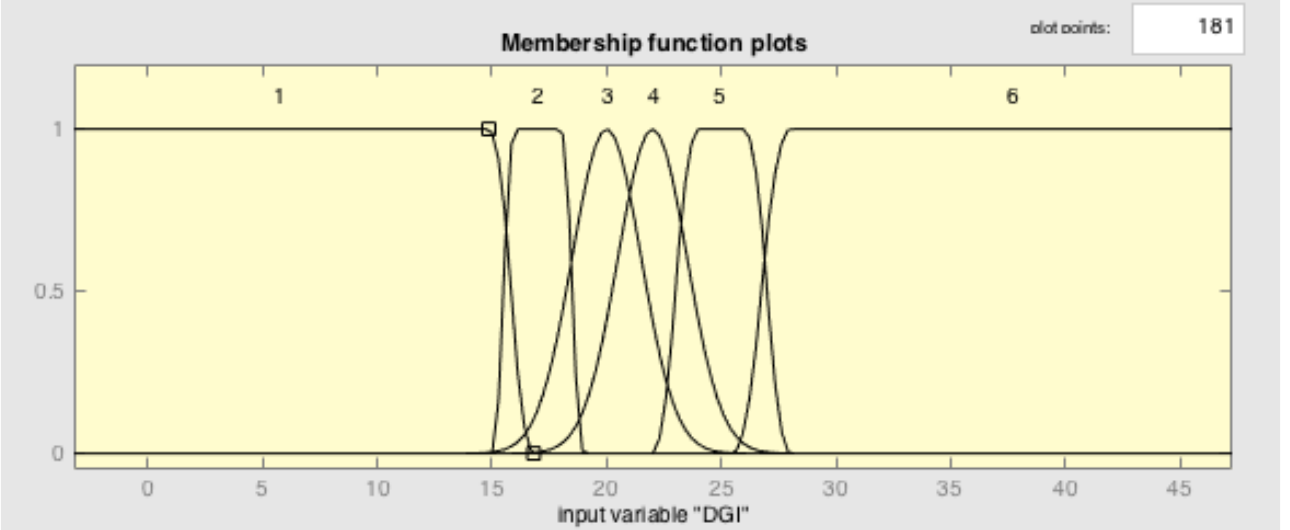
The first version of the controller was mostly a hand-designed mapping from DGI to tint. Below a low glare threshold, the window stayed untinted. Above the intolerable glare threshold, it applied maximum tint. Between those points, the output was allowed to increase gradually. This was enough to define the structure, but it still left the most interesting part open: adaptation.
Adding adaptation
The adaptive part used MATLAB's neuro-fuzzy designer to train the fuzzy inference system against input/output data. In a real deployment, that data could come from logged sensor readings and passenger adjustments. If someone keeps manually increasing tint when the controller leaves the window too bright, the system should eventually learn that preference.
Since I did not have real in-flight data, I generated idealized training examples instead. That was a limitation, but it was still useful for demonstrating the mechanism. I created two simple passenger-preference scenarios: one where the passenger was less tolerant of sunlight and wanted tint applied earlier, and one where the passenger was more tolerant and could keep the window clearer for longer.
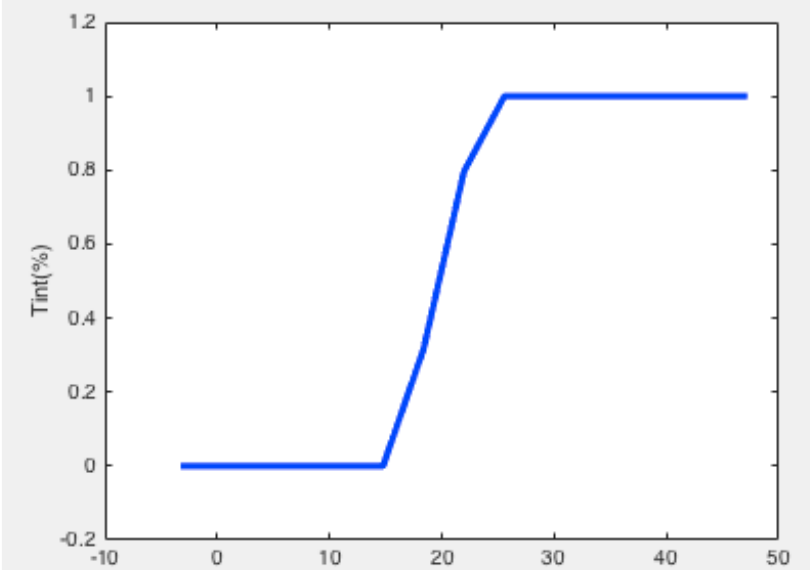
A trained output function for a passenger profile that applies tint earlier.
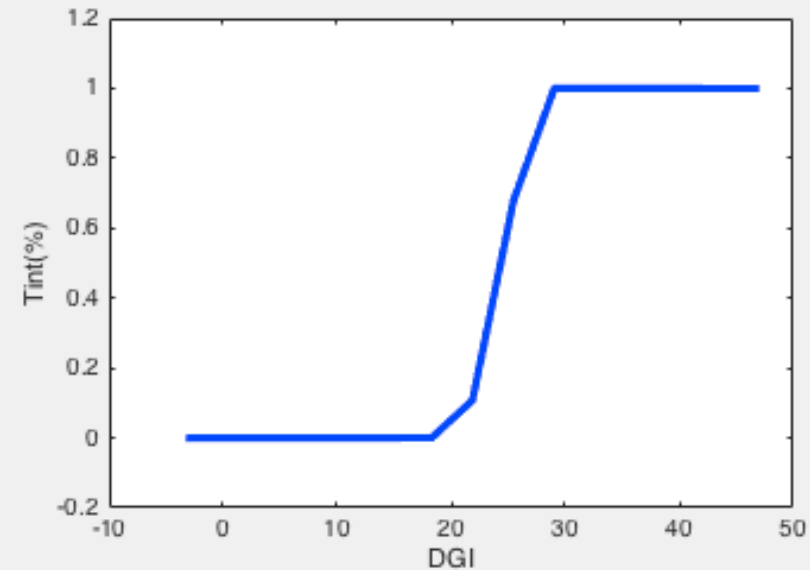
A trained output function for a passenger profile that tolerates more sunlight.
The result was not meant to be a finished adaptive comfort model. It was more of a proof-of-concept for how the relationship between glare and tint could be tuned over time. Looking back, I like that framing. The project was less "the system knows what comfort is" and more "the system starts with a reasonable model and has a path to become less generic."
Final thoughts
The obvious missing piece is real data. The project treated passenger preference, in-flight lighting conditions, and window luminance with fairly clean assumptions because the actual sensing setup did not exist. A better version would collect cabin measurements across different flight conditions, log how passengers actually adjust the tint, and separate visual comfort from other effects like heat, cabin lighting, seat position, and reflections from the aircraft structure.
I would also be more careful now about the human side of the objective. "Comfort" sounds like a scalar control target, but it is really an interaction between perception, expectation, activity, mood, and context. That is part of what made the project fun. Even though it was an aerospace thesis, the core problem was not purely aerospace: it was about taking a messy subjective state, finding a measurable proxy for it, and designing a controller that could adapt without pretending the proxy was the whole story.
In hindsight, I appreciate this being one of my first real-world research projects. It was the earliest example of this ineffable feeling of actively fishing around in a cognitive state of the unknown, trying to simultaneously survey the space and push it along unknown directions hoping to trip the intuition that delivers a solution. As the years pass I've become all too familiar with this feeling or navigating in the dark. I love it.